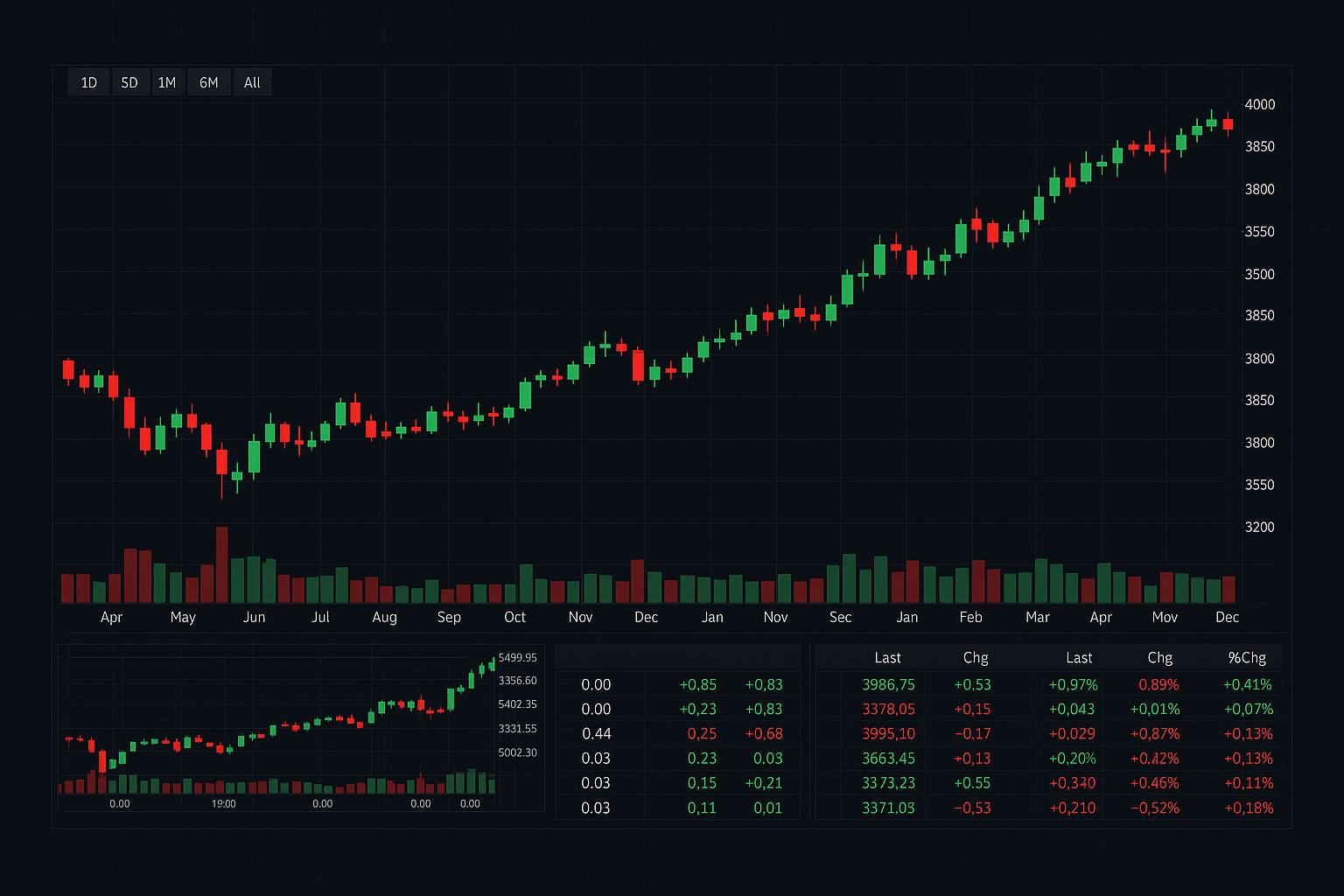
Onchain institutions face a reality that traditional finance never had to solve: risk moves at the speed of blockchain. Markets operate 24/7, positions shift in seconds, and liquidity can vanish between one block and the next. Most institutions enter this space armed with tools designed for legacy markets, discovering too late that crypto risk operates by different rules. This is where Strøm Bitpulse changes the game.
Strøm Bitpulse is a neutral risk infrastructure built specifically for institutions navigating onchain markets. It delivers what competitors cannot: deterministic data pulled directly from the blockchain, real-time position verification across multiple protocols, and transparency that replaces black-box methodologies. For lenders, prime brokers, and asset managers, it means underwriting with confidence, monitoring without gaps, and making decisions backed by chain truth rather than educated guesses.
| Feature | Strøm Bitpulse | Traditional Risk Tools |
|---|---|---|
| Data Source | Deterministic onchain data | Heuristic models and APIs |
| Position Verification | Real-time across protocols | Batch processing, delays |
| Risk Methodology | Transparent, configurable | Black-box, vendor-controlled |
| Neutrality | Independent infrastructure | Often tied to asset management |
| Uptime Guarantee | 99.9% uptime commitment | Variable reliability |
To Remember
Strøm Bitpulse solves the three core problems holding institutions back from onchain markets: it provides data integrity through deterministic onchain sources, eliminates black-box risk models through transparent methodologies, and maintains strict neutrality to avoid conflicts of interest. Monitoring over $5B in assets with 99.9% uptime reliability, it's built by institutions for institutions.
What Is Strøm Bitpulse and How Does It Solve Onchain Risk?
The Core Infrastructure for Neutral Risk Assessment
Strøm Bitpulse is an independent software and data provider designed to give institutions the confidence to operate safely in onchain markets. Unlike risk curators who blend advisory services with asset management interests, Bitpulse operates as a pure infrastructure layer. It pulls data directly from the blockchain, runs deterministic calculations, and surfaces the results without hidden assumptions or vendor biases.
Think of it as the difference between asking a bank to tell you whether a loan is good (conflict of interest) versus accessing verified court records yourself (neutral truth). Bitpulse gives you the court records. For a lender setting collateral requirements, this means knowing exactly what positions are worth in real time, not guessing based on vendor models. For a prime broker building risk simulations into a trading platform, it means users can manage exposure without leaving the interface, backed by onchain reality. For an asset manager tracking portfolio performance across multiple pools, it means liquidity data precise enough to optimize order routing at liquidations with minimal slippage.
Why Traditional Risk Tools Fall Short in Crypto Markets
Traditional finance built risk infrastructure for slow, regulated markets where you can call the exchange, verify through a broker, or check an official settlement ledger. Onchain markets broke that model completely. There is no central registry, no closing bell, no single source of truth except the blockchain itself. Third-party risk providers adapted by using heuristics: educated guesses about liquidity, assumptions about market behavior, and statistical models trained on incomplete data.
The result is predictable. Liquidity data becomes stale or inaccurate. Positions are mispriced. Unexpected losses follow, destroying trust in the infrastructure itself. Worse, many risk tools are managed by firms that also oversee asset management or other revenue streams, creating invisible conflicts of interest. A risk curator might shade their models to favor certain assets or strategies because their parent company benefits. Institutions have no visibility into how those methodologies work because they're treated as proprietary black boxes.
Strøm Bitpulse bypasses this entire problem by returning to first principles: pull the data directly from the blockchain, use deterministic logic that anyone can verify, and stay independent so there's no incentive to distort the truth.
How Strøm Bitpulse Delivers Data Integrity Where Competitors Fail
Deterministic Data vs. Heuristic-Based Risk Models
Deterministic data means if you run the same calculation twice, you get the same answer. It's what happens when you pull pool reserves directly from Aave, Uniswap, or Curve and compute price impact mathematically. There's no guessing involved. Heuristic-based models, by contrast, rely on assumptions. They might say "based on historical patterns, we estimate slippage will be about this much," but they can't prove it from onchain data.
For institutions, this difference is everything. A lender using deterministic data can set collateral ratios confident they're backed by real numbers. If Aave reports $2B in USDC liquidity at a given moment, that's chain truth. If a third-party vendor says "we estimate liquidity will hold around $1.8B," that's a guess. When markets move fast (and onchain they always do), guesses fail. Bitpulse's deterministic approach means risk models update in real time as positions shift, so you're never flying blind.
Eliminating Black-Box Methodologies in Risk Curation
Black-box risk tools work like this: you input your portfolio, the tool spits out a risk score, and you trust it. You have no idea how the score was calculated because the vendor won't say. Maybe they're using a proprietary model trained on their own data. Maybe they're weighting certain assets differently based on internal preferences. You'll never know, and when something breaks, you can't debug it.
Strøm Bitpulse flips this model inside out. The methodologies are transparent. You can see exactly how risk is being calculated, adjust the parameters to match your risk appetite, and verify the logic yourself. This transparency does two things. First, it builds trust because there's nowhere for conflicts of interest to hide. Second, it lets institutions customize their risk models instead of accepting a one-size-fits-all approach from a vendor.
Real-Time Position Verification Across Multiple Protocols
Onchain activity sprawls across many protocols. A single institution might have lending positions on Aave, liquidity on Uniswap, collateral in Curve, and derivative positions on dYdX. Traditional tools either miss positions entirely or batch-process them on a delay. By the time a risk report runs, the data is hours old and the market has moved.
Bitpulse's infrastructure connects directly to each protocol and verifies positions in real time. When a user deposits collateral on Aave, Bitpulse knows immediately. When liquidity shifts on a Curve pool, the system recalculates risk instantly. This continuous verification means alerts fire early, before small problems become big ones. A lender monitoring loan-to-value ratios on hundreds of positions gets warnings the moment any account approaches liquidation, not after it's already happened.
Which Institutions Benefit Most from Strøm Bitpulse?
Risk Management for Lenders and Collateral Optimization
For lenders, collateral management is existential. Set requirements too loose and you absorb losses when positions unwind. Set them too tight and you can't compete for borrowers. Traditional lending relies on credit scores and income verification. Onchain lending has only collateral.
A lender using Strøm Bitpulse configures risk models once, then monitors thousands of positions automatically. The system ingests collateral valuations in real time, detects when accounts approach dangerous LTV ratios, and surfaces alerts long before liquidation becomes necessary. Margin levels can be optimized based on actual volatility and liquidity data rather than historical guesses. A borrower pledging ETH as collateral has that pledge verified against actual Ethereum prices every block, so the lender always has accurate exposure.
This eliminates surprise losses and builds repeatable risk discipline. Over time, lenders also reduce operational overhead because position monitoring is automated and margin adjustments are data-driven rather than manual.
Prime Brokers: Integrating Risk Simulations Into Trading Platforms
Prime brokers sit between traders and the markets. They provide leverage, execute trades, and manage counterparty risk. In traditional finance, a prime broker's platform includes risk dashboards and exposure calculators. Onchain prime brokers have struggled to build equivalent tools because they lacked access to live, reliable risk data.
Strøm Bitpulse changes that equation. A prime broker can integrate Bitpulse's risk data and simulation tools directly into its platform. A trader entering a position sees real-time calculations of their exposure, what happens if the market moves 5% or 10%, and what collateral is required. They never leave the trading interface to understand risk. This transparency actually reduces risk because traders make more informed decisions, and brokers can enforce exposure limits with confidence that the numbers backing those limits are accurate.
Asset Managers: Portfolio Monitoring and Liquidation Routing
Asset managers deploying capital across multiple onchain protocols face two constant challenges: tracking what they own and executing efficiently when they need to exit.
Strøm Bitpulse's portfolio monitoring layer consolidates positions across protocols and presents unified analytics. An asset manager sees APY across lending pools, liquidity conditions on their positions, and concentration risk in one dashboard. When it comes time to exit, the system can route liquidation orders across multiple pools to minimize slippage. Instead of executing a large trade on a single pool and accepting heavy price impact, the manager can split orders intelligently based on liquidity profiles that Bitpulse tracks in real time.
This directly improves returns. On a $100M position, reducing slippage from 0.5% to 0.2% means capturing an extra $300K that would otherwise have disappeared into markets. Over dozens of exits throughout the year, that efficiency compounds substantially.
How Does Strøm Bitpulse Compare to Other Onchain Risk Platforms?
Bitpulse vs. Traditional Risk Curators
The market includes various vendors offering risk analytics for onchain markets. Some are traditional finance firms extending into crypto. Others are crypto-native startups. All make claims about coverage and accuracy. The critical difference lies in incentive alignment.
Traditional risk curators often have fingers in many pies. They manage assets, advise clients, and sell risk data. Each of these creates pressure to shape risk models in ways that favor certain strategies or assets. A vendor managing a fund benefits when their risk models downplay risks in that fund's holdings. Crypto-native competitors might be independent, but many lack the depth of data integration or the infrastructure reliability needed by institutional users.
Strøm Bitpulse is built specifically as infrastructure for risk, nothing else. There's no asset management arm, no trading desk, no hidden revenue stream that could bias the data. This purity means the risk models stay honest.
Why Neutrality Matters: Avoiding Conflicts of Interest
Conflicts of interest in risk data can be subtle but devastating. A vendor's risk model might penalize certain assets more heavily because competitors hold those assets. It might downweight liquidity risk in pools where the vendor holds position. It might time risk reports to align with the vendor's trading activity. Institutions using such tools unknowingly handicap themselves.
Neutrality isn't a marketing phrase at Bitpulse, it's a structural feature. Independent infrastructure that touches no assets, manages no funds, and has no trading interests simply has no reason to bias risk calculations. When an institution uses Bitpulse, they're accessing data filtered only by the laws of blockchain, not vendor preferences.
Performance Metrics That Matter ($5B+ Assets Monitored, 99.9% Uptime)
Bitpulse's track record speaks for itself. The platform currently monitors over $5B in onchain assets and maintains 99.9% uptime. That's not a marketing claim; that's the operational reality of institutions entrusting their risk oversight to the platform.
The 99.9% uptime threshold matters more than it sounds. For context, that's about 43 minutes of acceptable downtime per month. When a lender's risk monitoring goes down, positions move unmonitored. Liquidations might happen without alerts firing. $5B in monitored assets means institutions large enough to sue for outages trust Bitpulse to stay online. The 99.9% metric is what it takes to justify that trust.
Beyond uptime, the $5B figure signals adoption velocity. Institutions don't move risk infrastructure lightly. That much capital flowing through Bitpulse represents dozens of institutional clients making the decision that deterministic, neutral risk data outperforms alternatives.
What Are the Key Features of Strøm Bitpulse's Risk Suite?
Portfolio Monitoring and Real-Time Analytics
Strøm Bitpulse's portfolio monitoring layer aggregates positions from multiple protocols into a single, unified view. An institution deploying capital across Aave, Curve, Uniswap, and Compound sees everything in one place. The system tracks collateral values, yields being earned, concentration by protocol, and cross-protocol correlations.
Real-time analytics mean you're not looking at yesterday's picture. As markets move, analytics update instantly. APY from lending pools refreshes every few seconds. Liquidity conditions for positions update continuously. Concentration risk recalculates as new positions are added or existing ones decay. This constant refresh means decision-makers always see current reality, not stale data.
For a treasury team managing institutional funds, this transforms portfolio oversight from a labor-intensive manual process into an automated system that surfaces insights the moment they become relevant.
Sentinel Alerts: Early Detection of Market Changes
Sentinel is Bitpulse's alert system, and it works on a simple principle: catch problems early or don't catch them at all. An institution configures thresholds based on its risk tolerance. Maybe a lender decides that any loan-to-value ratio above 75% requires an alert. Maybe an asset manager decides that any single pool holding more than 20% of a position needs escalation. Sentinel monitors continuously and fires alerts the instant conditions breach thresholds.
The speed here is the advantage. In traditional markets, alerts might fire on a schedule (end of day, end of week). Onchain markets move constantly, and Sentinel works in real time. A liquidation risk that emerges at 3am on a Sunday doesn't wait for business hours to surface. The alert fires immediately, giving operations teams the chance to respond while solutions are still available.
Early detection transforms crisis management into routine risk maintenance. When you see warnings before problems become emergencies, you can respond calmly with better options than if you first notice the problem after liquidation has already occurred.
Liquidity Data APIs for Precise Risk Quantification
Risk quantification depends entirely on accurate liquidity data. If you think a position is worth more than it actually is, your risk models produce garbage. Strøm Bitpulse provides APIs that surface precise, real-time liquidity information across supported protocols.
An API call returns exactly how much liquidity exists at various price levels, what slippage would be for an order of a given size, and how those conditions are expected to evolve based on onchain activity. A prime broker building position models can use these APIs to tell a trader exactly what will happen if they unwind a position. An asset manager optimizing execution can route orders to the pools with deepest liquidity for their particular trade size, minimizing slippage.
This precision cuts through the guesswork that plagues traditional risk infrastructure. Instead of asking "how much will this cost roughly?" institutions can answer "how much will this cost exactly?" and plan accordingly.
Getting Started with Strøm Bitpulse
Strøm Bitpulse meets institutions where they are. The platform offers a self-serve option for teams wanting to explore capabilities independently, and it also provides hands-on demos for organizations ready to dive deeper. That flexibility means you're never locked into a long process before understanding what the tool does.
For teams new to institutional onchain risk, Bitpulse functions as both a data layer and an educational tool. Using the platform builds intuition about how onchain risk actually works, what data matters, and how to configure models that match your institution's risk appetite. Most institutions find that after a few weeks of active use, their team understands onchain risk mechanics better than they did after months of reading documentation elsewhere.
The adoption path is designed to be frictionless. You start by pointing the system at your positions, configuring basic thresholds, and letting monitoring run. As your team gets comfortable with the data, you layer on more sophisticated features. Prime brokers build platform integrations. Asset managers implement liquidation routing. Lenders automate margin management. Each layer builds on previous experience with the platform, so adoption happens naturally rather than requiring a major operational shift.
Why Institutions Choose Strøm Bitpulse for Onchain Risk
The onchain economy in 2026 is no longer an experiment. Billions move through decentralized protocols daily. Institutions managing that capital need infrastructure that respects the unique realities of blockchain: constant uptime required, no central authorities to call, mathematical truth as the only reliable arbiter. Strøm Bitpulse was built for exactly this environment.
Unlike tools designed to retrofit traditional finance onto blockchain, Bitpulse starts from first principles. Deterministic data pulled directly from the chain. Transparent methodologies anyone can audit. Strict independence to avoid conflicts of interest. Real-time monitoring across multiple protocols. These aren't features added to a legacy platform; they're the foundation everything else builds on.
For lenders, the result is confidence in collateral requirements backed by onchain reality. For prime brokers, it's risk integration that makes complex exposures instantly comprehensible to traders. For asset managers, it's the insight to optimize every exit and capture efficiency that compounds into major value over time. For every institution, it's the comfort of knowing risk monitoring never sleeps, never guesses, and never favors hidden interests.
In markets that operate 24/7, your risk oversight should too. Strøm Bitpulse delivers that continuous, honest, institutional-grade monitoring that onchain economics demand.